Microsoft Omnichannel Opportunity
Unifying Direct, Retail, and Partner channels into one coherent omnichannel strategy for Surface buyers.
Company
Microsoft
Timeline
2021
—
2022
Role
Digital Design Strategist
Focus
Omnichannel, Journey Strategy, Cross-Channel Analytics
Impact
Transformed Surface from a channel-by-channel approach into a unified omnichannel strategy guiding organizational investment and prioritization.
Project overview
A buyer's journey to purchase a Surface was as follows: research on Microsoft.com → compare at Best Buy → check YouTube reviewers → buy from a partner because of price → support through a completely different channel.
At each touchpoint, the story changed.
The Core Friction: Three Unsolved Problems
Inconsistent Value Props: Promotions, bundles, and even product compatibility messaging differed by channel. A customer couldn't tell if Microsoft.com or Best Buy had the "true" price or features
Trust Gaps: Customers trusted YouTubers and in-store staff more than Microsoft's own digital content for critical questions like "Will this replace my laptop?"
Post-Purchase Chaos: Support flows (warranty claims, returns, setup) varied wildly depending on where you bought. This created high friction, repeat contacts, and churn
The Microsoft team faced questions: Where should Surface invest? Which channel matters most? How do we fix this without cannibalizing each other?
Critical Decisions
The biggest organizational tension was this: Every channel wanted to be every part of the journey.
The Decision: I forced prioritization by limiting the "Hero Journeys" to only 3-4 critical paths initially:
Research on microsoft.com → Compare in-store → Purchase anywhere → Guided setup.
YouTube research → In-store demo → Direct purchase from Microsoft.
Price-conscious partner buyer → Post-purchase support unification.
Each journey had owners, KPIs, and success measures.
Why this worked: Saying "no" to 90% of ideas forced real prioritization and made everyone accountable.
The Solution
We built an Operating Model, not just a map.
Harmonized Messaging Guardrails: A unified content strategy ensuring "Will this replace my laptop?" was answered the same way on Microsoft.com, in-store, and on partner sites
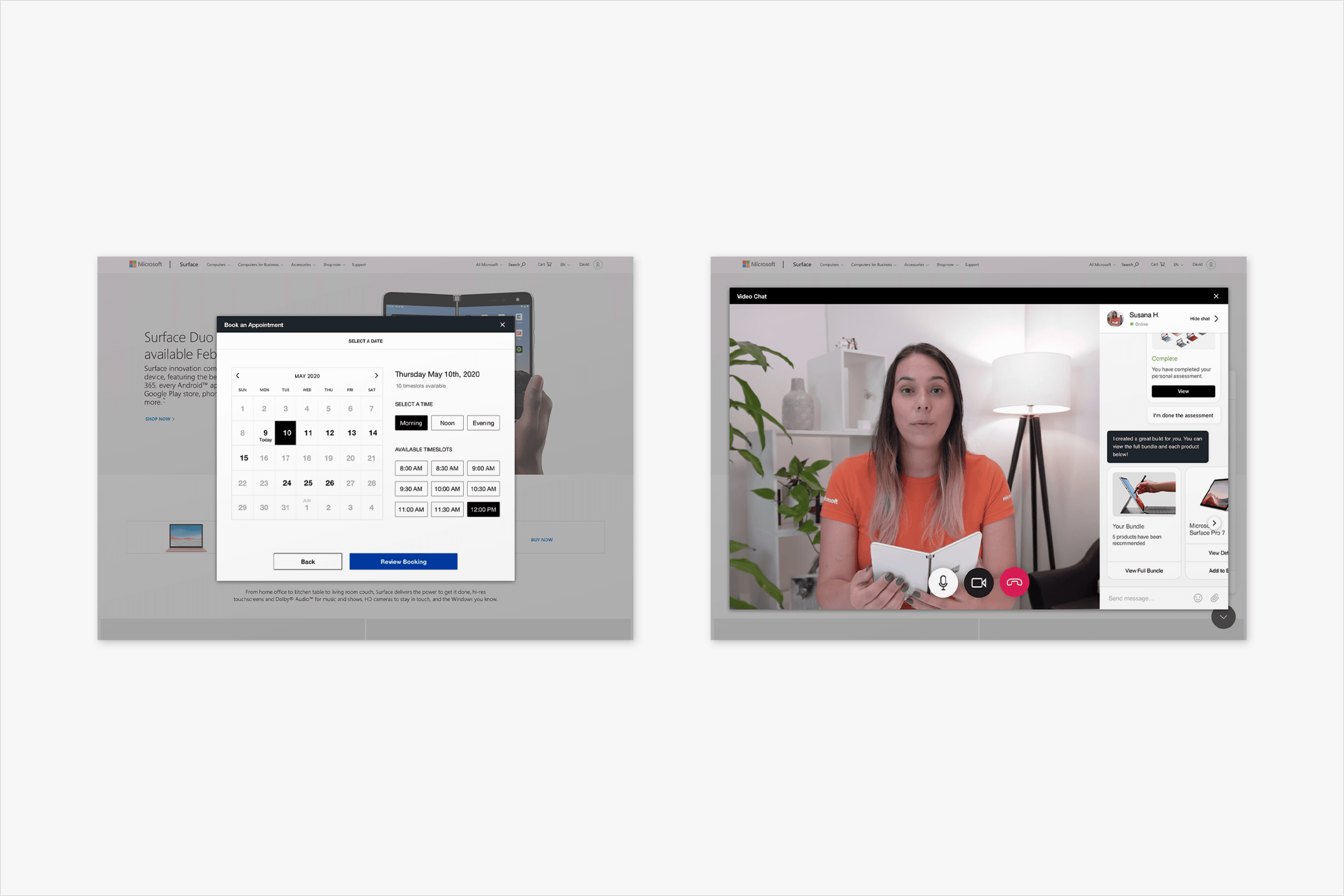
The Comparison Hub: An in-store support initiative ensuring retail associates had real-time access to Microsoft.com specs, so customers could compare confidently
Unified Promise Page: A single, simplified "Why Shop at Microsoft" message (not separate promises for Direct, Surface, Business, etc.)
Results
This project shifted Surface from channel-by-channel cost to unified.
Strategic Clarity: Leadership got the "single omnichannel strategy" they asked for, a decision-making framework that forced prioritization instead of funding everything
Channel Alignment: Instead of competing silos, channels now understood their role and could optimize for it (Direct focused on education, Retail on experience, Partners on fulfillment value)
Unified Customer Experience: By harmonizing the post-purchase flow, we reduced the "Where is support?" confusion that drove contact-centre volume and churn
Microsoft Omnichannel Opportunity
Unifying Direct, Retail, and Partner channels into one coherent omnichannel strategy for Surface buyers.
Company
Microsoft
Timeline
2021
—
2022
Role
Digital Design Strategist
Focus
Omnichannel, Journey Strategy, Cross-Channel Analytics
Impact
Transformed Surface from a channel-by-channel approach into a unified omnichannel strategy guiding organizational investment and prioritization.
Project overview
A buyer's journey to purchase a Surface was as follows: research on Microsoft.com → compare at Best Buy → check YouTube reviewers → buy from a partner because of price → support through a completely different channel.
At each touchpoint, the story changed.
The Core Friction: Three Unsolved Problems
Inconsistent Value Props: Promotions, bundles, and even product compatibility messaging differed by channel. A customer couldn't tell if Microsoft.com or Best Buy had the "true" price or features
Trust Gaps: Customers trusted YouTubers and in-store staff more than Microsoft's own digital content for critical questions like "Will this replace my laptop?"
Post-Purchase Chaos: Support flows (warranty claims, returns, setup) varied wildly depending on where you bought. This created high friction, repeat contacts, and churn
The Microsoft team faced questions: Where should Surface invest? Which channel matters most? How do we fix this without cannibalizing each other?
Critical Decisions
The biggest organizational tension was this: Every channel wanted to be every part of the journey.
The Decision: I forced prioritization by limiting the "Hero Journeys" to only 3-4 critical paths initially:
Research on microsoft.com → Compare in-store → Purchase anywhere → Guided setup.
YouTube research → In-store demo → Direct purchase from Microsoft.
Price-conscious partner buyer → Post-purchase support unification.
Each journey had owners, KPIs, and success measures.
Why this worked: Saying "no" to 90% of ideas forced real prioritization and made everyone accountable.
The Solution
We built an Operating Model, not just a map.
Harmonized Messaging Guardrails: A unified content strategy ensuring "Will this replace my laptop?" was answered the same way on Microsoft.com, in-store, and on partner sites
The Comparison Hub: An in-store support initiative ensuring retail associates had real-time access to Microsoft.com specs, so customers could compare confidently
Unified Promise Page: A single, simplified "Why Shop at Microsoft" message (not separate promises for Direct, Surface, Business, etc.)
Results
This project shifted Surface from channel-by-channel cost to unified.
Strategic Clarity: Leadership got the "single omnichannel strategy" they asked for, a decision-making framework that forced prioritization instead of funding everything
Channel Alignment: Instead of competing silos, channels now understood their role and could optimize for it (Direct focused on education, Retail on experience, Partners on fulfillment value)
Unified Customer Experience: By harmonizing the post-purchase flow, we reduced the "Where is support?" confusion that drove contact-centre volume and churn