Architecting a Volunteer Ecosystem
Transforming a disconnected volunteer base into a self-sustaining digital community.
Company
ShelterBox
Timeline
2022
—
2023
Role
Product Manager & Designer
Focus
Tech Selection, Product-Led Growth (PLG), Retention
Impact
Designed a strategy to increase volunteer retention by 40% and reduce administrative overhead for a 4-person team.
Project overview
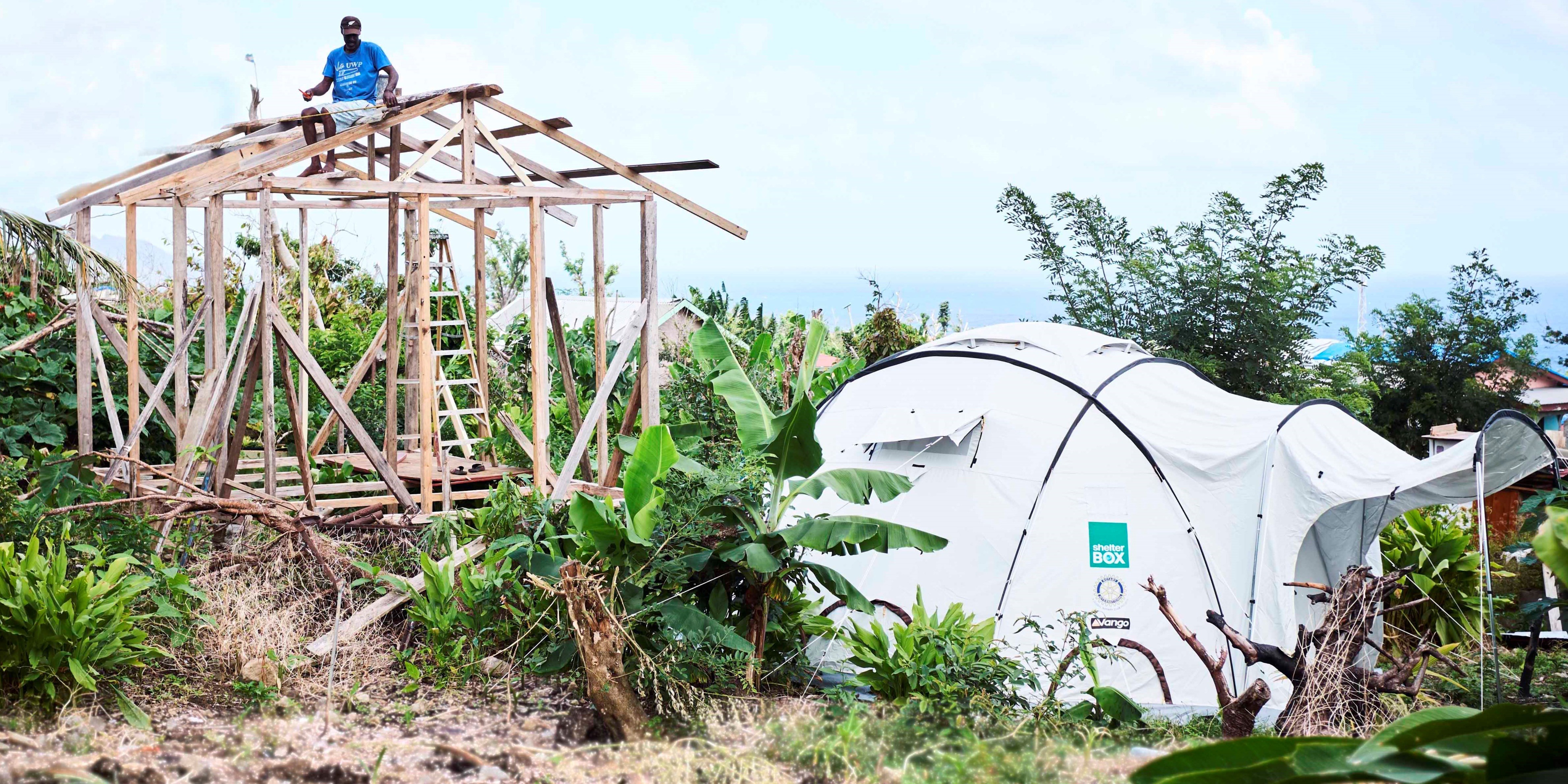
ShelterBox Canada delivers critical disaster relief, but its internal operations were facing their own emergency. With only 4 full-time staff managing a nationwide network of volunteers, the organization was operationally overwhelmed.
The core friction was a "Transactional" Volunteer Model:
Silent Attrition: Volunteers joined with passion but left due to isolation. Without a digital "home," they felt disconnected from the mission and each other
Administrative Bottleneck: Staff spent 80% of their time on manual coordination (emails, spreadsheets), leaving zero capacity for strategic growth
Wasted Talent: Highly skilled volunteers (marketers, developers) were treated as generic labor because the organization had no system to identify or utilize their specific expertise
Critical Decisions
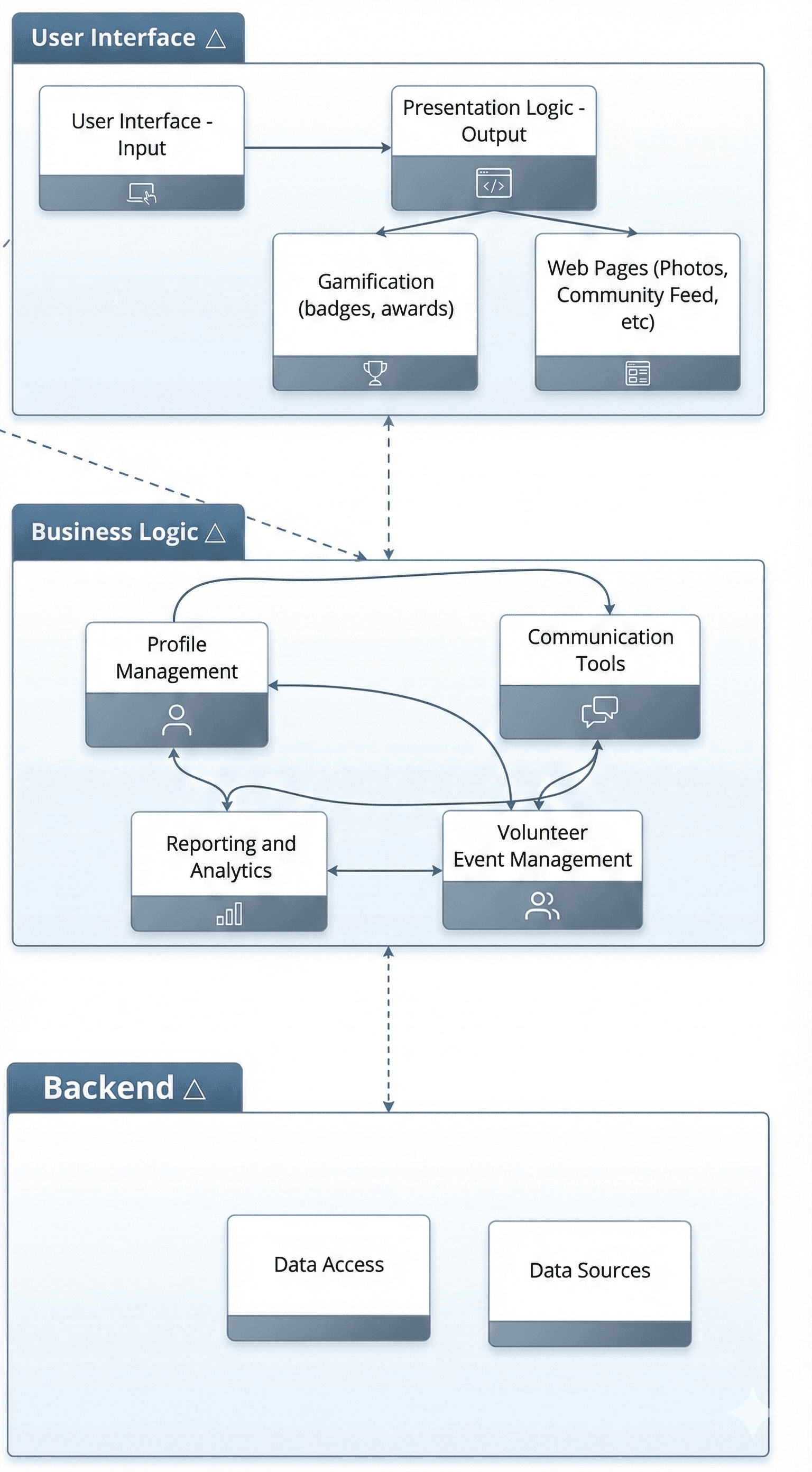
A major strategic pivot was adopting a Product-Led Growth (PLG) framework for a non-profit.
The Decision: We treated volunteering like a SaaS funnel.
The Logic:
Acquisition: "Invite a Friend" referral loops built into the portal
Activation: A "First 30 Days" onboarding checklist (gamified) to ensure new volunteers felt useful immediately
Retention: Automated "Re-engagement" triggers if a volunteer went silent for 90 days
The Solution
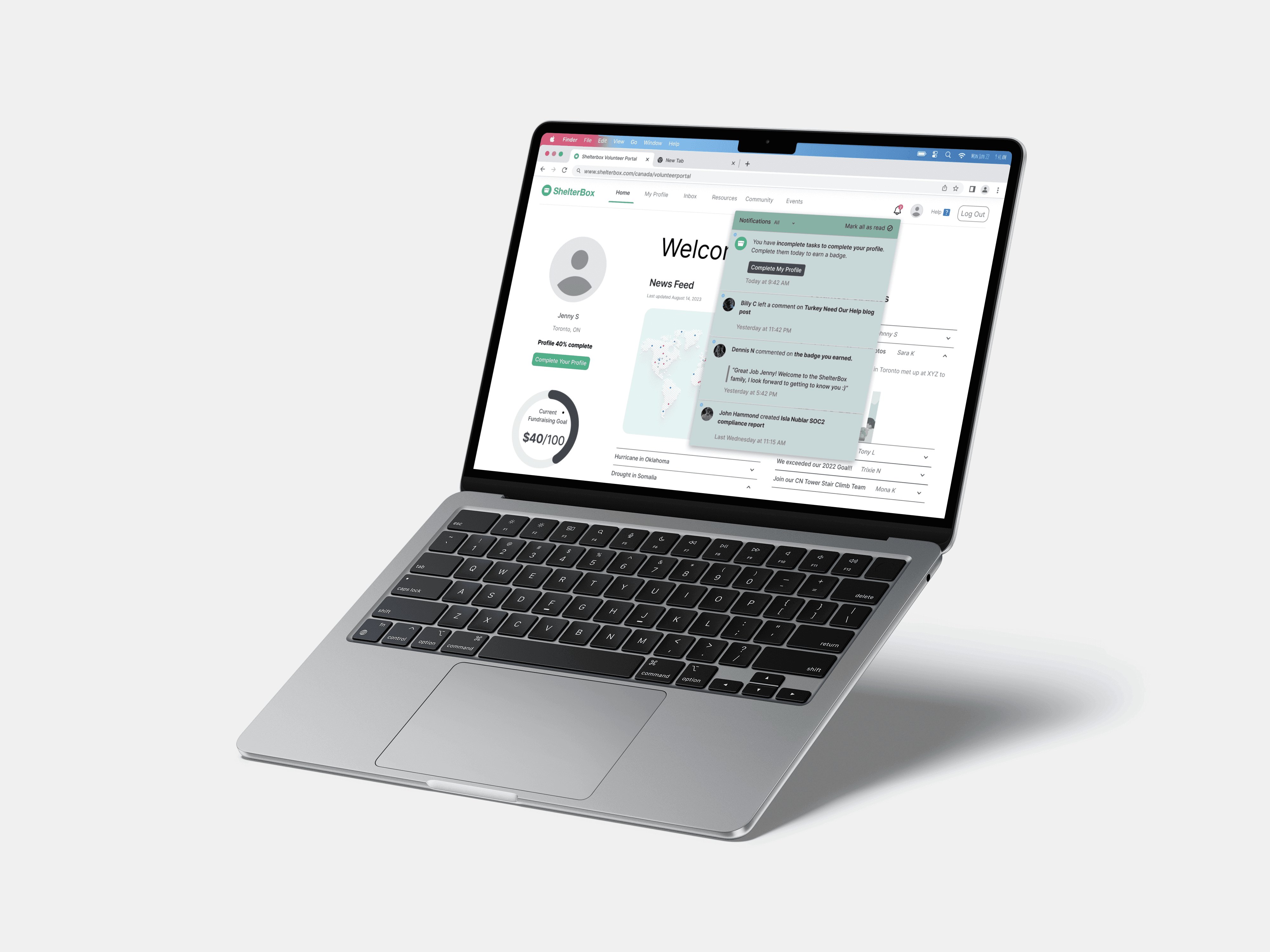
We delivered a high-fidelity Volunteer Command Center built to scale without adding headcount.
The Community Feed: A social-style news feed where volunteers could share wins, photos, and updates—replacing the "silent void" with a vibrant community pulse
The "Match" Engine: An automated opportunity board that matched volunteers to tasks based on their specific interests and availability
Smart Resource Library: A self-serve knowledge base that allowed volunteers to upskill themselves on disaster relief protocols without staff hand-holding
Results
The concept gave ShelterBox a clear product vision for how digital could support and scale its volunteer program, instead of relying on ad‑hoc tools and one‑off campaigns. Stakeholders aligned around a prioritized roadmap that focused first on simplifying onboarding and recurring actions, then layering in deeper features like recognition and advanced reporting. The project demonstrated my ability to wear both product and UX hats: clarifying goals, turning human needs into a coherent journey, and designing a pragmatic solution that respects non-profit constraints.


Architecting a Volunteer Ecosystem
Transforming a disconnected volunteer base into a self-sustaining digital community.
Company
ShelterBox
Timeline
2022
—
2023
Role
Product Manager & Designer
Focus
Tech Selection, Product-Led Growth (PLG), Retention
Impact
Designed a strategy to increase volunteer retention by 40% and reduce administrative overhead for a 4-person team.
Project overview
ShelterBox Canada delivers critical disaster relief, but its internal operations were facing their own emergency. With only 4 full-time staff managing a nationwide network of volunteers, the organization was operationally overwhelmed.
The core friction was a "Transactional" Volunteer Model:
Silent Attrition: Volunteers joined with passion but left due to isolation. Without a digital "home," they felt disconnected from the mission and each other
Administrative Bottleneck: Staff spent 80% of their time on manual coordination (emails, spreadsheets), leaving zero capacity for strategic growth
Wasted Talent: Highly skilled volunteers (marketers, developers) were treated as generic labor because the organization had no system to identify or utilize their specific expertise
Critical Decisions
A major strategic pivot was adopting a Product-Led Growth (PLG) framework for a non-profit.
The Decision: We treated volunteering like a SaaS funnel.
The Logic:
Acquisition: "Invite a Friend" referral loops built into the portal
Activation: A "First 30 Days" onboarding checklist (gamified) to ensure new volunteers felt useful immediately
Retention: Automated "Re-engagement" triggers if a volunteer went silent for 90 days
The Solution
We delivered a high-fidelity Volunteer Command Center built to scale without adding headcount.
The Community Feed: A social-style news feed where volunteers could share wins, photos, and updates—replacing the "silent void" with a vibrant community pulse
The "Match" Engine: An automated opportunity board that matched volunteers to tasks based on their specific interests and availability
Smart Resource Library: A self-serve knowledge base that allowed volunteers to upskill themselves on disaster relief protocols without staff hand-holding
Results
The concept gave ShelterBox a clear product vision for how digital could support and scale its volunteer program, instead of relying on ad‑hoc tools and one‑off campaigns. Stakeholders aligned around a prioritized roadmap that focused first on simplifying onboarding and recurring actions, then layering in deeper features like recognition and advanced reporting. The project demonstrated my ability to wear both product and UX hats: clarifying goals, turning human needs into a coherent journey, and designing a pragmatic solution that respects non-profit constraints.